Views: 0 Author: Site Editor Publish Time: 2026-07-27 Origin: Site


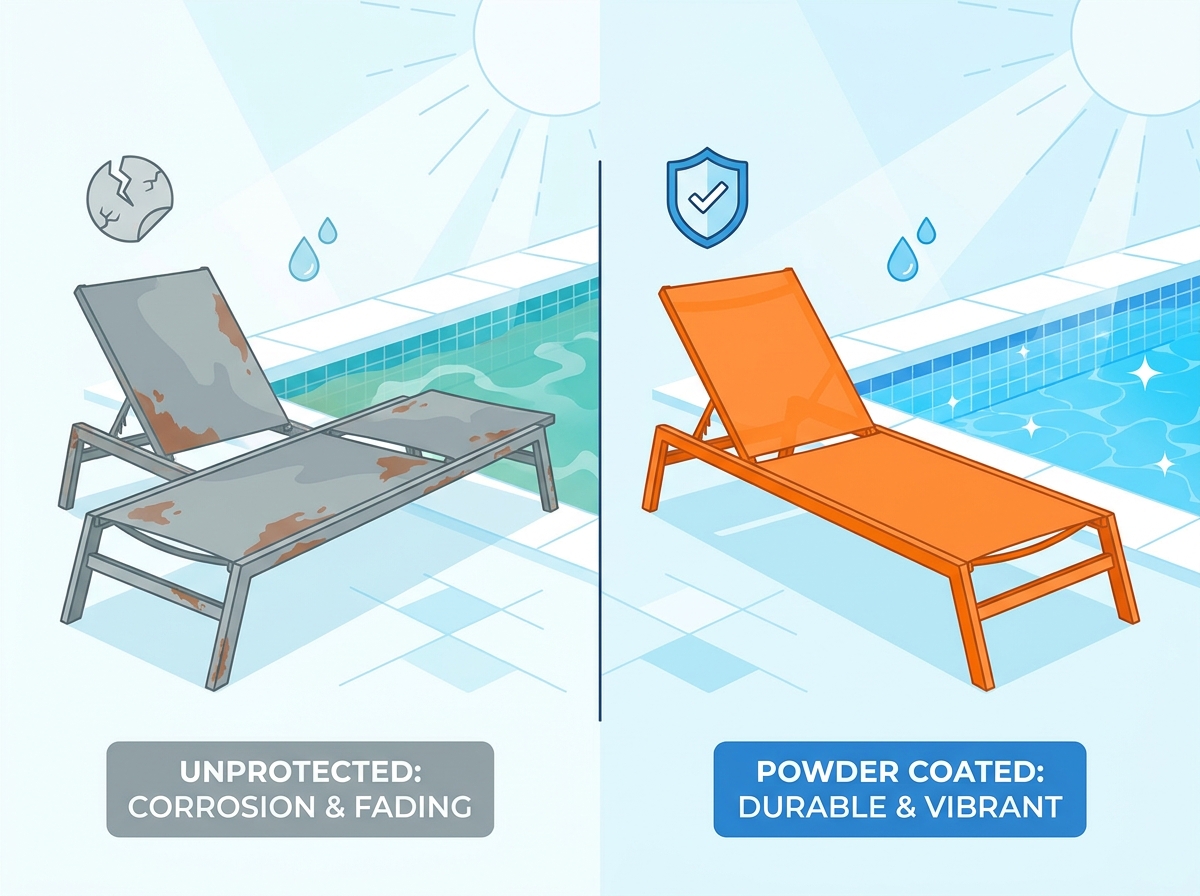
Frequent outdoor furniture replacement in commercial resorts, luxury hotels, and high-end residential poolside environments represents a massive hidden operational drain. Poolside microclimates act as accelerated testing chambers for materials. The constant exposure to chlorinated water, saltwater splashback, intense UV radiation, and chemical solvents like sunscreen and tanning oils rapidly degrades standard finishes. This exposure leads to structural pitting, surface peeling, and aesthetic failure.
While raw aluminium naturally resists traditional red rust, its surface remains highly vulnerable to oxidation, atmospheric pollution, and chemical etching. A professional, thermal-bonded powder coating is not just an aesthetic choice. It is a non-negotiable structural requirement for any viable, high-performance aluminium sun lounger operating in these harsh environments.
Chemical and Environmental Barrier: Powder coating creates an impermeable, continuous seal that separates the raw aluminium substrate from corrosive poolside elements, rainwater, oxygen, and atmospheric contaminants.
Superior Electrostatic Adhesion: Cured at temperatures upwards of 400°F, powder coating forms a cross-linked polymer bond that resists the chipping, cracking, and flaking common in traditional liquid paints, especially around complex frame designs.
Aesthetic and Structural Synergy: Modern powder coating technologies allow the best aluminum outdoor sun lounger designs to maintain structural integrity and color retention without sacrificing design flexibility under heavy UV and chemical exposure.
Poolside environments introduce a unique combination of destructive elements that test the limits of any material. Chlorine and bromine off-gassing near pool water surfaces create a highly reactive atmosphere. When these chemicals settle on metal surfaces, they accelerate degradation at an alarming rate. In coastal environments, aerosolized salt spray presents an even greater threat. Saltwater acts as an electrolyte, drastically speeding up the galvanic corrosion process on unprotected metal substrates. You will often see this manifest as white, powdery spots on bare metal within weeks of exposure.
Atmospheric pollution, urban smog, and acid rain further complicate this microclimate. These environmental factors interact with pool chemicals to break down weak surface finishes. Additionally, intense UV radiation breaks down chemical bonds in standard paints, causing them to chalk and fade. Commercial sunscreens contain active ingredients like avobenzone and oxybenzone, which act as aggressive plasticizers and solvents. When guests transfer these lotions to furniture, the chemicals etch into inferior coatings, causing permanent staining and structural weakening that cannot be washed away.
To understand the severity of these stressors, consider the daily exposure cycle of poolside furniture:
Morning condensation mixes with residual airborne pool chemicals, creating a mildly acidic moisture layer on the frame.
Mid-day UV radiation bakes this chemical mixture into the surface, testing the thermal stability of the finish.
Afternoon usage introduces abrasive elements like sand, along with chemical solvents from sunscreens and body oils.
Evening temperature drops cause the metal to contract, testing the flexibility and adhesion of the coating.
Understanding metal behavior is critical for selecting outdoor furniture. Steel and iron undergo a destructive ferric oxide process, commonly known as rust, which flakes away and continuously exposes fresh metal to the elements. Aluminium behaves differently. When exposed to oxygen, it forms a microscopic layer of aluminium oxide. This natural oxidation process actually protects the deeper metal from further decay, making it a superior choice for wet environments.
However, this natural defense mechanism is insufficient for commercial pool areas. Bare or poorly treated aluminium will pit, chalk, and degrade when subjected to chlorine, salt, and sunscreen. The surface becomes rough, porous, and visually unappealing. Therefore, while aluminium provides a rust-free baseline, it requires a robust, engineered barrier to survive poolside conditions. Without a high-grade finish, the metal will eventually succumb to galvanic corrosion, especially if it comes into contact with dissimilar metals like stainless steel fasteners in a saltwater environment.
Powder coating relies on advanced application techniques to ensure maximum protection. The process begins with applying dry powder electrostatically. The powder particles receive a positive charge as they pass through the spray gun, while the grounded aluminium frame carries a negative charge. This magnetic attraction ensures uniform coverage across complex curves, internal joints, and hidden welds. The powder wraps around the metal, adhering evenly to all surfaces.
Professional applicators must overcome the "Faraday Cage effect," where electromagnetic fields prevent powder from entering tight corners and deep recesses. Proper grounding, specialized spray guns, and skilled technicians ensure the powder penetrates screw threads and tight angles. Following application, the frame enters a curing oven at temperatures typically reaching 400°F. During this phase, the dry powder melts, flows, and chemically cross-links into a continuous, high-density polymer film. This thermal bonding process is what gives powder coating its legendary durability.
The resulting cross-linked polymer structure creates an impenetrable barrier against water, oxygen, and chemical intrusion. Unlike liquid paint, which dries through solvent evaporation and leaves microscopic pores, powder coating cures into a solid, non-porous shell. This eliminates the pathways that moisture and salt typically use to reach the metal substrate.
This thermal-bonded finish offers exceptional tensile strength and flexibility. It withstands heavy impact and abrasion from being dragged across concrete pool decks. Furthermore, the flexible nature of the polymer allows it to expand and contract with the metal frame during rapid temperature fluctuations, preventing the micro-cracking that often plagues traditional liquid paints. When a heavy guest drops onto a lounger, the frame flexes; a high-quality powder coat flexes with it without snapping or flaking.
Not all powder coatings offer the same level of protection. Industry standards dictate specific coating thicknesses, usually measured in mils or microns, required for commercial outdoor use. A standard application typically ranges from 2 to 3 mils. For extreme environments, specialized grades are necessary to prevent premature failure.
The American Architectural Manufacturers Association (AAMA) provides strict guidelines for coating performance. Understanding these grades is essential for specifying the right furniture for your environment.
AAMA Specification | Application Grade | Weathering Performance | Best Use Case |
|---|---|---|---|
AAMA 2603 | Standard Architectural | 1 year South Florida exposure | Mild residential, indoor/outdoor transition spaces |
AAMA 2604 | High Performance | 5 years South Florida exposure | Standard commercial pools, inland resorts |
AAMA 2605 | Marine Grade | 10 years South Florida exposure | Coastal environments, heavy saltwater exposure |
Coating efficacy depends heavily on structural design. Frames must avoid water traps and include proper drainage holes in hollow sections to prevent internal moisture accumulation. Seamless welds are crucial, as rough joints trap moisture and create starting points for corrosion. A beautifully coated frame will still fail if water pools inside the extrusion and freezes or stagnates.
Technical necessity dictates coating hidden details. Adjustable backrest brackets, stacking tracks, and pre-drilled fastener holes must receive adequate coverage. Raw metal exposure in these hidden areas often leads to premature failure. Furthermore, powder coating supports various aesthetic requirements, including matte, gloss, and textured finishes, while maintaining superior UV and color stability. Textured finishes, in particular, excel at hiding minor scratches and fingerprints in high-traffic areas.
Powder-coated surfaces simplify operational maintenance. Unlike wood, which requires seasonal sanding and oiling, or standard painted metals that need frequent touch-ups, powder coating demands minimal intervention. Routine cleaning requires only simple soap and water to remove sunscreen residue and environmental dirt.
This durability translates directly into operational efficiency. Facilities experience a significant reduction in labor hours required for seasonal upkeep. Maintenance teams can clean frames quickly without relying on specialized chemical treatments, keeping inventory in active service rather than in the repair shop. A simple washdown protocol ensures the longevity of the finish:
Rinse the frame with fresh water to remove loose debris and salt crystals.
Apply a mild, non-abrasive soap solution using a soft sponge or cloth.
Pay special attention to areas where sunscreen and body oils accumulate, such as armrests and backrest edges.
Rinse thoroughly with fresh water to remove all soap residue.
Allow the frame to air dry completely before stacking or storing.
Evaluating the initial premium of a high-quality powder-coated frame requires looking at its extended operational lifespan. Cheaply painted furniture often requires replacement within two to three seasons due to peeling, rusting hardware, or structural failure. In contrast, a properly powder-coated frame can easily last a decade or more, even in harsh coastal conditions.
Avoiding premature replacement cycles prevents out-of-service inventory and aesthetic degradation in hospitality environments. When furniture looks worn and corroded, it directly impacts the perceived value of the property. Investing in superior finishes ensures the pool deck maintains a premium appearance year after year, eliminating the disruption of frequent furniture change-outs.
When selecting poolside furniture, you must weigh the rigidity and heat-retention of powder-coated metal against alternative materials like marine-grade polymers or sling fabrics. Solid metal frames can become hot in direct sunlight, which is why high-quality loungers often combine a powder-coated frame with breathable, UV-resistant mesh.
This hybrid approach leverages the structural strength and corrosion resistance of the powder-coated aluminium while providing a comfortable, temperature-regulated seating surface. The mesh allows water to drain instantly, while the coated frame provides the necessary rigidity to support heavy daily use without sagging or warping.
Procuring outdoor furniture requires vigilance against substandard manufacturing processes. The most critical risk involves improper substrate pre-treatment. Before coating, the aluminium must be chemically cleaned, de-greased, and acid-etched. Failing to prepare the surface leads to poor adhesion, resulting in hidden filiform corrosion and eventual peeling. If the metal isn't perfectly clean, the powder will bond to the dirt or oil instead of the aluminium, guaranteeing failure.
Another common pitfall is the use of "thin-film" applications. Budget manufacturers often apply insufficient powder to cut material costs. These thin layers are highly susceptible to pinhole corrosion, where microscopic gaps in the coating allow moisture and chemicals to reach the raw aluminium, compromising the entire structure. Always verify the mil thickness of the coating before committing to a large order.
Evaluating manufacturer warranties is essential for protecting your investment. Buyers must read the fine print carefully. Many standard warranties include specific exclusions that render them useless in commercial pool settings. A warranty that looks good on paper might be voided the moment the furniture is placed near chlorinated water.
Identify common warranty loopholes. Look for clauses regarding "proximity to saltwater," "commercial pool chemical exposure," or "coastal environmental degradation." A reliable manufacturer will offer a warranty that explicitly covers the furniture in the specific microclimate where it will be deployed, without hiding behind unreasonable maintenance requirements or geographical exclusions.
Powder coating serves as a critical structural barrier that dictates the viability and lifespan of any premium outdoor furniture in poolside environments. It is far more than a cosmetic color application. Proper thermal bonding and rigorous pre-treatment separate high-performance equipment from rapid-degradation liabilities.
When evaluating options, prioritize manufacturers who transparently disclose their pre-treatment processes, curing temperatures, and powder coating grades based on recognized standards.
Request physical material finish samples to inspect coating thickness and texture before ordering.
Verify commercial warranties specifically for poolside and coastal use, ensuring no hidden saltwater exclusions exist.
Audit the structural design of shortlisted loungers for proper water drainage, seamless welds, and coated fastener holes.
Confirm the specific AAMA or Qualicoat grade applied to the frames to guarantee environmental suitability.
A: Typically 10 to 15+ years depending on the coating grade, pre-treatment quality, and adherence to basic maintenance routines, even in harsh UV environments.
A: Aluminium does not rust (form red iron oxide), but it can corrode and pit. A high-quality powder coat prevents aerosolized salt and pool chemicals from reaching the metal substrate, effectively eliminating this risk.
A: Use mild soap and warm water with a soft cloth or sponge. Avoid abrasive cleaners, stiff brushes, or harsh chemical solvents which can degrade the polymer finish over time.
A: Both are excellent, but powder coating generally offers thicker barrier protection against pool chemicals and a wider variety of UV-stable colors and textures, whereas anodizing integrates with the metal but can be susceptible to acidic or highly alkaline chemical staining.
A: High-quality, properly cured powder coats are highly resistant to the chemical solvents in sunscreen, though it is recommended to wipe down frames regularly to prevent long-term residue buildup.
A: Because aluminium doesn't rust, a chip won't cause the frame to structurally fail or bleed rust stains onto the pool deck. However, the exposed aluminium may oxidize locally. Touch-up paint pens provided by the manufacturer can be used to seal small chips and maintain the moisture barrier.


