Views: 0 Author: Site Editor Publish Time: 2025-06-09 Origin: Site


The allure of outdoor dining is undeniable, offering a blend of nature's tranquility and the comforts of home. However, selecting an outdoor dining set that withstands the elements and retains its aesthetic appeal over time is a challenge many face. This article delves into the materials, designs, and construction methods that contribute to the durability and longevity of outdoor dining sets, providing valuable insights for consumers seeking the best options in the market.
The choice of material is paramount when it comes to the longevity of outdoor furniture. Common materials include wood, metal, wicker, and plastics, each with its own set of advantages and vulnerabilities.
Teak is renowned for its natural oils and tight grain, which make it resistant to water, insects, and decay. Its durability is unmatched among hardwoods used in outdoor settings. Studies have shown that teak furniture can last for decades with minimal maintenance. However, it comes with a higher price tag due to its scarcity and the time it takes to mature.
Aluminum is lightweight, corrosion-resistant, and requires minimal upkeep. It's an excellent choice for those living in humid or coastal areas where rust is a concern. Powder-coated aluminum enhances durability by providing an additional layer against scratches and environmental wear. According to industry reports, aluminum outdoor furniture holds up exceptionally well over time, making it a popular choice among consumers.
Traditional wicker made from natural fibers is susceptible to moisture and can degrade quickly outdoors. However, synthetic wicker, often made from polyethylene resin, offers enhanced durability. It's designed to be UV-resistant and withstand various weather conditions. When combined with a sturdy frame, synthetic wicker dining sets can provide both aesthetic appeal and longevity.
While materials lay the groundwork, the design and construction techniques play a critical role in how well an outdoor dining set holds up.
Quality joinery methods, such as mortise and tenon joints in wooden furniture, significantly enhance durability by providing strong connections without relying solely on adhesives or fasteners. In metal furniture, welds should be smooth and continuous to prevent moisture ingress, which can lead to corrosion from the inside out.
Finishes like powder coating on metals or varnishes on wood act as barriers against environmental factors. High-quality finishes prevent UV degradation, moisture absorption, and surface wear. Innovations in nano-coatings are also emerging, offering ultra-thin protective layers that enhance longevity without altering the material's natural appearance.
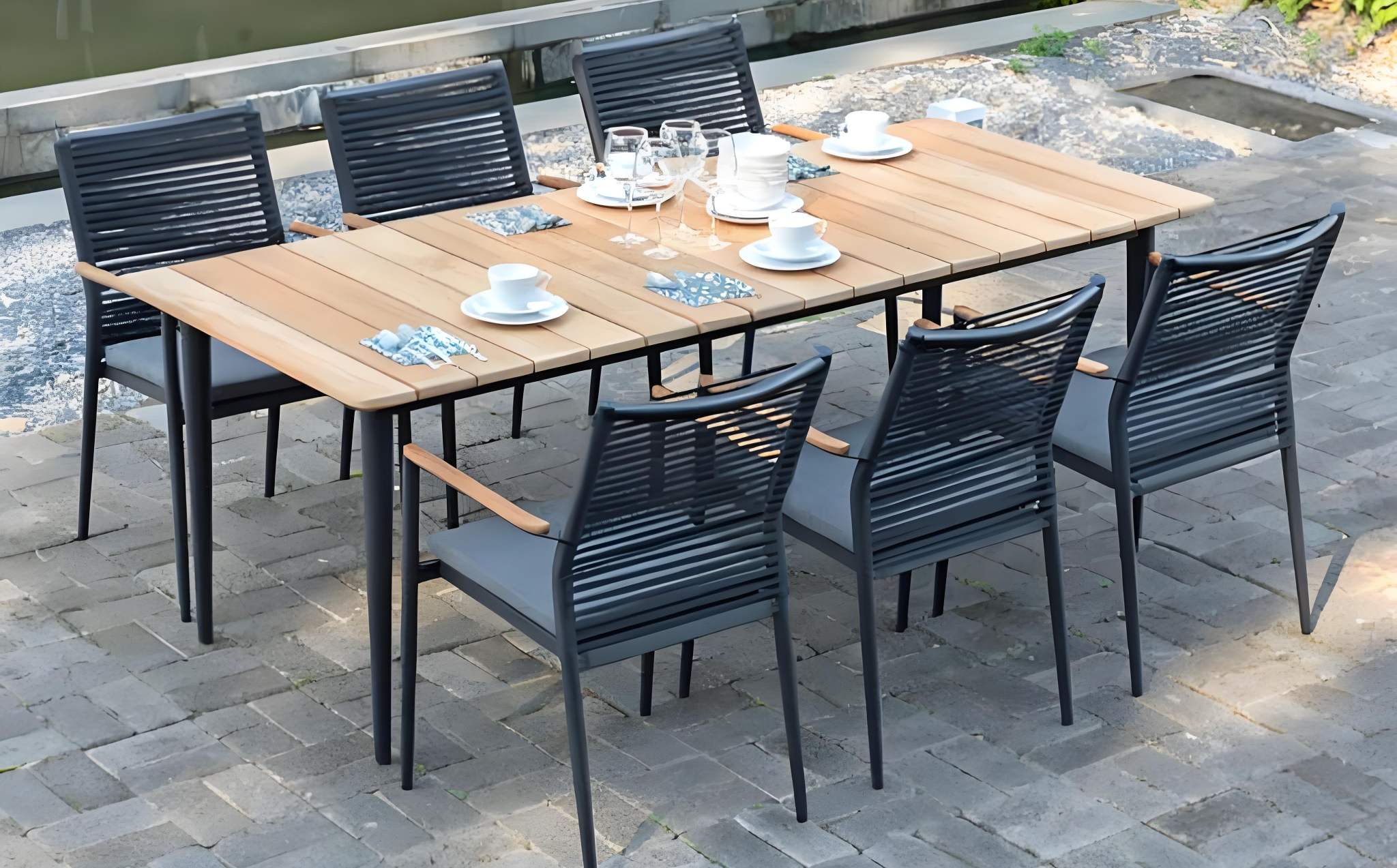 Outdoor furniture must contend with varying weather conditions, from scorching sun to heavy rain and snow. Understanding how different materials and designs cope with these elements is crucial.
Exposure to sunlight can cause fading, cracking, and weakening of materials. UV-resistant coatings and materials, such as solution-dyed acrylic fabrics and UV-stabilized plastics, maintain their integrity and color longer. Manufacturers often test their products using accelerated weathering tests to predict long-term performance.
Materials prone to absorbing moisture can warp, rot, or develop mold and mildew. Hardwoods like teak and synthetic materials are less absorbent, while metals like aluminum resist rust. Drainage design is also important; furniture that allows water to drain and dry quickly will last longer in wet environments.
Regular maintenance can significantly extend the life of an outdoor dining set. Different materials require varying levels of care.
Teak and other hardwoods benefit from periodic cleaning and oiling to maintain their luster and prevent drying out. Using specialized sealants can also protect the wood from moisture and UV rays.
Aluminum and stainless steel are low-maintenance but should be cleaned to prevent buildup of dirt and pollutants that can cause surface degradation over time. Touching up any scratches in powder coatings will prevent corrosion.
Examining actual usage scenarios provides insight into how different outdoor dining sets perform over time.
An aluminum dining set in a coastal resort demonstrated excellent resistance to salt air corrosion over a five-year period, with minimal signs of wear. In contrast, untreated steel furniture showed significant rusting within a year.
In tropical climates, synthetic wicker over aluminum frames maintained structural integrity and appearance better than natural rattan or unprotected woods. Users reported that minimal maintenance was required, mainly involving occasional cleaning.
Industry experts emphasize the importance of considering both material quality and construction techniques when selecting outdoor furniture.
John Smith, a veteran outdoor furniture designer, notes, "The best outdoor dining sets are those that marry durable materials with thoughtful design. It's not just about withstanding the elements but also about ensuring comfort and aesthetic appeal."
Similarly, Maria Rodriguez, a materials engineer, states, "Advancements in material science have significantly improved the longevity of outdoor furniture. Consumers should look for products that utilize these innovations for the best long-term value."
While high-end materials and construction offer superior durability, they come at a higher initial cost. It's essential to consider the total cost of ownership.
Investing in a premium outdoor dining set may seem costly upfront, but if the furniture lasts twice as long as a cheaper alternative, it offers better value over time. Additionally, high-quality sets often require less maintenance and retain their aesthetic appeal longer.
Manufacturers that stand behind their products with robust warranties demonstrate confidence in their durability. Consumers should consider the warranty terms and customer support when making a purchase decision.
Sustainability is an increasingly important factor for consumers. Durable furniture reduces waste by decreasing the frequency of replacement.
Opting for furniture made from sustainably sourced wood, recycled metals, or recyclable plastics can minimize environmental impact. Certifications like FSC (Forest Stewardship Council) for wood products indicate responsible sourcing.
Choosing a durable outdoor dining set means fewer resources consumed over time and less material ending up in landfills. It's an environmentally conscious decision that also benefits the consumer economically.
Durability doesn't have to come at the expense of style. Many manufacturers offer customizable options that allow consumers to choose designs that match their preferences while still providing long-lasting quality.
Modular outdoor dining sets allow for flexibility and scalability, adapting to different spaces and needs. They often feature components that can be replaced individually, enhancing the overall lifespan of the set.
High-quality materials can be finished in a variety of colors and textures without compromising durability. Powder coatings, for instance, offer both protective qualities and aesthetic versatility.
Selecting the best outdoor dining set involves careful consideration of materials, construction quality, maintenance requirements, and environmental impact. Products made from durable materials like teak and aluminum, constructed with high-quality techniques, and designed for weather resistance tend to hold up the best over time. By investing in a quality outdoor dining set, consumers not only enhance their outdoor living experience but also make a sustainable choice that offers long-term value. Making an informed decision ensures that the furniture will remain a cherished part of outdoor spaces for years to come.


