Views: 0 Author: Site Editor Publish Time: 2026-08-04 Origin: Site


Procuring outdoor furniture for hospitality venues involves high financial stakes where capital expenditure directly intersects with daily guest satisfaction and operational efficiency. Hotel operators must make precise decisions when outfitting pool decks, beach fronts, and rooftop terraces. Failing to distinguish between residential-grade and commercial-grade outdoor furniture leads to disastrous results on the property. Premature frame failure occurs frequently when buyers ignore structural specifications. Corrosion destroys frames in harsh environments like coastal resorts or chlorinated poolsides. This negligence inflates replacement cycles and disrupts the guest experience during peak seasons.
This technical evaluation framework helps procurement managers and hotel operators assess specifications, mitigate supplier risks, and maximize return on investment. Sourcing commercial sun loungers at scale requires strict attention to material science, structural engineering, and daily operational logistics. You will learn exactly what separates a standard patio chair from a heavy-duty hospitality asset.
Material Grade Dictates Lifespan: Commercial viability requires extruded aluminium with marine-grade powder coating to withstand high-traffic use and environmental stressors.
Hardware is the Weak Link: Even premium frames will fail if assembled with non-stainless, easily corrosive fasteners or weak joint mechanisms.
Operational Logistics Matter: Stackability, weight, and integrated wheels are non-negotiable features for daily poolside setup and off-season storage.
Long-Term Value > Unit Price: Long-term value relies on the availability of replacement parts (like sling fabrics) and comprehensive commercial warranties, not just the initial bulk discount.
Hotel pool and beach furniture must meet strict baseline requirements. Durability, weather resistance, and low maintenance dictate success in commercial environments. Guests expect pristine conditions every time they step onto the pool deck. Staff require furniture that is easy to clean, stack, and maneuver during daily setup or sudden weather events. An aluminium sun lounger meets these demands when engineered correctly, but only if the underlying material specifications align with commercial standards.
Extruded aluminium serves as the industry standard for high-traffic environments. Manufacturers force heated aluminium through a die to create continuous, hollow shapes. This process yields an exceptional strength-to-weight ratio. Extruded frames maintain structural integrity under heavy daily use, flexing slightly to absorb stress without permanent deformation. You will find extruded profiles in the main load-bearing sections of high-quality loungers.
Cast aluminium involves pouring molten metal into molds. It produces heavier, more brittle frames. Cast frames often crack under sudden impact or extreme weight loads. While cast aluminium allows for intricate, ornate designs, it lacks the tensile strength required for a commercial pool deck where guests frequently drop or drag the furniture. Hospitality venues should prioritize extruded frames for the main chassis and legs, reserving cast components only for non-load-bearing decorative elements if absolutely necessary.
Selecting the right material impacts long-term viability and daily maintenance schedules. Procurement teams often weigh aluminium against resin and teak. The table below contrasts these three popular commercial materials based on field performance.
Material | Performance & Durability | Maintenance Requirements | Weight & Mobility |
|---|---|---|---|
Aluminium (Extruded) | High structural integrity, rust-proof, UV resistant. Does not warp or crack. | Low. Requires only mild soap and water washdowns. | Lightweight. Easy for staff to stack and move daily. |
Resin / Commercial Plastic | Prone to UV degradation, yellowing, and surface scratching over time. | Low, but requires frequent replacement cycles due to aesthetic degradation. | Very lightweight. Often blows away in high winds, requiring constant retrieval. |
Grade A Teak | Extremely durable, weather-resistant natural wood. Resists rot and pests. | High. Requires regular oiling, sanding, and sealing to maintain color. | Very heavy. Difficult for staff to maneuver, stack, or store off-season. |
Raw aluminium oxidizes when exposed to the elements. Electrostatic powder coating provides the necessary protective barrier. Standard finishes work for inland, mild climates with low humidity. However, marine-grade finishes are mandatory for coastal resorts or highly chlorinated aquatic centers. Marine-grade powder coating involves rigorous pre-treatment, often including a chromate conversion coating, followed by a thicker application of the powder itself.
This multi-stage process prevents oxidation, blistering, and peeling. Saltwater spray and harsh pool chemicals quickly degrade standard paint, leading to unsightly pitting on the frame. Insist on certified marine-grade finishes to ensure longevity. When auditing suppliers, request documentation on their powder coating process, specifically looking for AAMA 2604 or AAMA 2605 compliance, which dictates superior weatherability and chemical resistance.
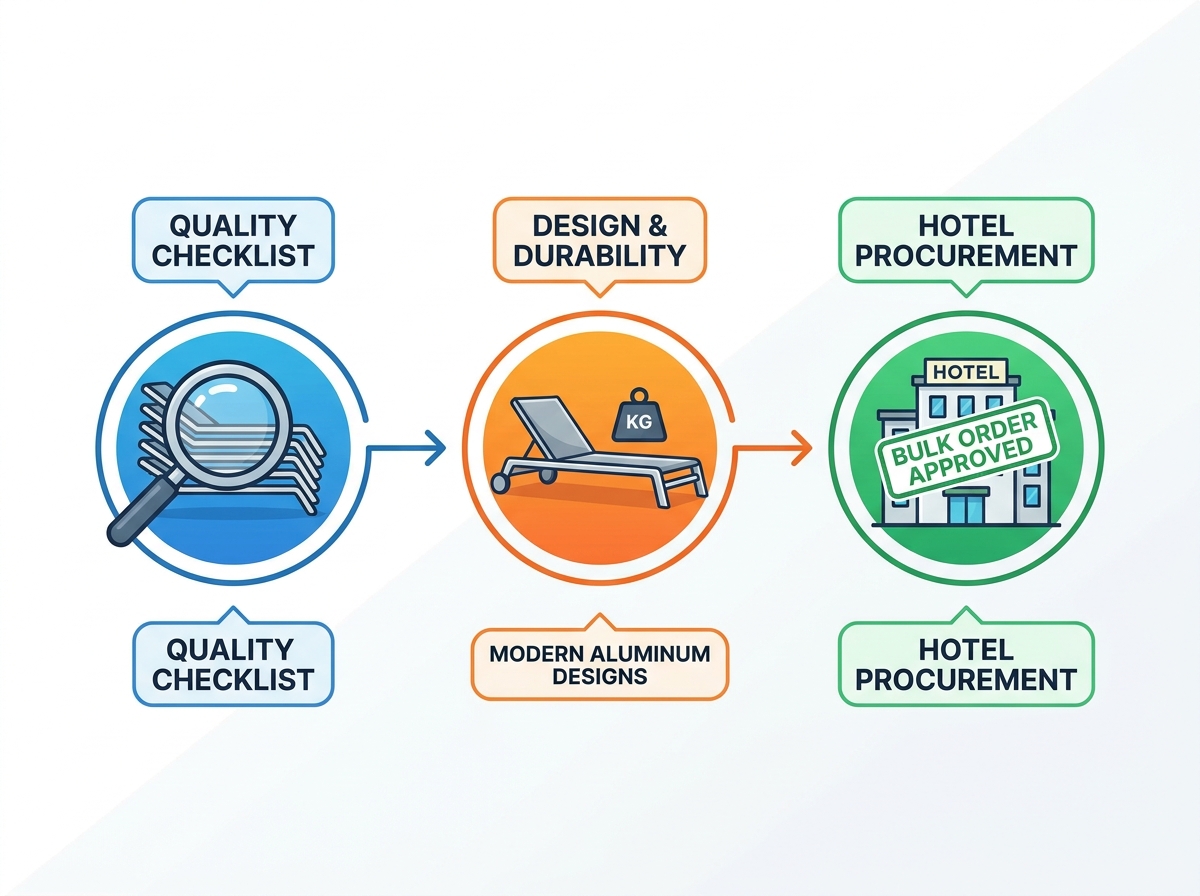
Evaluating technical specifications prevents costly procurement mistakes. You must look beyond the exterior finish to understand how the lounger will perform under continuous commercial stress. A thorough technical audit separates reliable equipment from disposable residential furniture.
Commercial metal thickness, known as gauge, determines structural stability. Hospitality environments require a minimum of 1.5mm to 2.0mm wall thickness for aluminium extrusions. Thinner residential gauges (often 1.0mm or 1.2mm) will bend, dent, or snap under the rigors of resort use. Ensure the static weight capacity exceeds 300 pounds. This safely accommodates all guests without risking frame collapse or liability issues. Ask suppliers for independent testing certificates verifying these load capacities.
Hardware represents the most common failure point in outdoor furniture. A premium aluminium frame means nothing if the bolts holding it together rust within six months. Screws, bolts, and hinges must utilize 304 or 316-grade stainless steel. Lower-grade metals rust quickly in humid or coastal environments. Rust bleeds onto pool decks, causing permanent stains on expensive stone or tile.
Inspect the joint mechanisms closely. Moving parts, especially on adjustable backrests, must feature nylon washers, Teflon spacers, or specialized bushings to prevent metal-on-metal friction. Metal grinding against metal wears away the powder coating, exposing the raw aluminium to oxidation and creating a loose, wobbly frame.
Breathable mesh fabrics like Textilene or Batyline offer superior comfort without the need for separate, high-maintenance cushions. Evaluate the attachment methods carefully. The fabric must integrate into a structural channel design, often using a spline system. This holds the material taut and prevents sagging after a single season of heavy use.
Verify that the mesh features UV resistance and anti-microbial treatments. These treatments prevent fading from intense sun exposure and stop mold growth caused by wet towels and humid conditions. Double-stitched seams using UV-resistant thread (like PTFE thread) are mandatory to prevent the fabric from tearing at the stress points.
Physical suitability varies based on location. You cannot deploy the same lounger on a sandy beach and a slick pool deck.
Beachfronts: Require sled-base designs. Traditional four-leg designs sink into soft sand, making the lounger unstable and difficult to get out of.
Rooftop Terraces: Experience high winds. Frames must possess enough aerodynamic design and physical weight to resist blowing over and causing damage or injury.
Poolsides: Require heavy-duty, non-marking rubberized foot caps to grip wet tiles, prevent slipping, and protect the deck surface from scratches.
Hotels no longer have to choose between durability and style. The latest modern aluminum outdoor sun lounger designs balance sleek, minimalist aesthetics with heavy-duty commercial requirements. Manufacturers now engineer visually striking pieces that withstand the brutal realities of hospitality operations.
Modern designs elevate the guest experience through material hybridization. Manufacturers blend powder-coated aluminium frames with premium accents to soften the industrial look of bare metal. Grade A teak armrests add a touch of natural luxury and remain cool to the touch. Handwoven PE rattan or marine-grade rope detailing on the backrests matches high-end resort themes. These hybrid designs maintain the structural durability of an aluminium chassis while offering sophisticated visual appeal that aligns with luxury branding.
Guest comfort relies on proper ergonomics. Backrest adjustment mechanisms must withstand constant manipulation by guests of all sizes. Integrated aluminium track systems offer superior durability. Avoid plastic ratchets entirely. Plastic becomes brittle in the sun and snaps under pressure, rendering the entire lounger useless. Look for designs offering at least four reclining positions, including a completely flat option for prone sunbathing and poolside massages.
Operational efficiency demands stackable designs. Staff must clear pool decks quickly for evening events, deep cleaning, or extreme weather warnings. Evaluate stacking height limits. Commercial loungers should stack at least ten units high safely without tipping. The frames must include integrated bumpers. These rubber or silicone guards prevent metal-to-metal scratching during storage and transport. Scratched powder coating leads directly to oxidation.
Daily repositioning strains hotel staff and damages property. Concealed or heavy-duty wheels facilitate easy movement. Staff can roll the loungers without dragging them. Dragging damages the frame legs, tears off foot caps, and scratches expensive pool deck surfaces. Wheels should feature non-marking rubber treads and rust-proof axles. Concealed wheels offer a cleaner aesthetic, hiding the mobility hardware within the rear leg extrusion.
Value influencing factors shift the focus from the initial purchase order price to the operational cost over a 5-to-7-year lifecycle. Buying cheap upfront often results in paying double over a decade due to constant replacements and intensive maintenance.
A conceptual trade-off analysis reveals the true cost of outdoor furniture. Cheaper, thin-walled imports might save 30% on the initial invoice. However, these units typically fail within 18 to 24 months in a commercial setting. Frames bend, slings sag, and hardware rusts. Premium commercial builds, featuring 2.0mm extruded aluminium and marine-grade coatings, easily last 7 to 10 years. The replacement cycle for premium furniture is significantly longer, drastically reducing the annualized cost of the asset.
Choose designs with replaceable slings and accessible hardware. Modular construction allows hotels to refurbish rather than replace entire units. When a mesh sling inevitably wears out after 3 or 4 years of heavy UV exposure and sunscreen accumulation, maintenance staff should be able to slide out the old fabric and install a new one using a simple rail-and-spline system. This capability extends the life of the aluminium frame indefinitely and keeps the property looking fresh without massive capital outlays.
Sourcing furniture at scale introduces significant operational risks. Vetting manufacturers ensures product quality, reliable delivery schedules, and post-purchase support. A rigorous vetting process protects the property from receiving a container full of defective goods.
Navigate MOQs carefully. Unverified manufacturers often demand massive upfront commitments. Plan container shipping logistics well in advance. Buffer your lead times for seasonal openings. Global shipping delays, port congestion, and customs holds can disrupt grand openings or renovations. Establish clear delivery timelines and negotiate penalty clauses for late shipments to hold the supplier accountable.
Scrutinize warranty documents thoroughly. Differentiate between residential and commercial coverage. Residential warranties become void immediately in a hospitality setting. Look for specific commercial exclusions. Many warranties exclude damage from coastal proximity, saltwater exposure, or fabric sagging. Demand comprehensive commercial coverage that protects your investment in high-traffic environments for at least 3 to 5 years on the frame and 1 to 2 years on the fabric and finish.
Mandate a physical sample unit before finalizing any bulk order. Procurement teams must conduct rigorous physical testing on-site.
The Wobble Test: Place the lounger on flat ground and apply uneven pressure to check for frame twisting.
Weld Inspection: Examine the joints. Welds should be smooth, continuous, and fully penetrate the metal, not spotty or ground down too thin.
Fabric Tension: Apply heavy weight to the center of the sling. It should bounce back immediately without permanent sagging.
Stacking Audit: Have staff stack and unstack the sample multiple times to verify ease of handling and check if the bumpers adequately protect the finish.
Selecting the right outdoor furniture directly impacts your property's reputation, guest comfort, and operational budget. Proper evaluation ensures lasting performance and protects your capital investment.
Audit your current maintenance logs to identify frequent failure points in your existing furniture inventory.
Define your specific environmental risk factors, such as saltwater exposure, high winds, or heavy chlorine use, before contacting suppliers.
Request detailed technical specification sheets from all shortlisted suppliers to verify aluminium gauge and hardware grades.
Order physical samples to conduct on-site stress tests with your maintenance and operations staff.
A: A high-quality commercial frame lasts 5 to 10 years, depending on the powder coating quality and environmental harshness. The sling fabric typically requires replacement every 3 to 5 years due to UV exposure, sunscreen accumulation, and constant daily use.
A: Aluminium dissipates heat quickly. High-quality powder coating combined with breathable mesh slings minimizes heat retention. They remain significantly cooler to the touch than solid resin, heavy plastic alternatives, or dark-colored metal frames.
A: Resin is cost-effective but prone to UV yellowing, scratching, and cracking. Teak offers a luxury look but demands labor-intensive regular maintenance like oiling. Aluminium provides the ideal balance of zero maintenance, sleek modern design, and exceptional structural longevity.
A: Commercial warranties explicitly cover high-frequency use and heavier weight loads found in hospitality settings. Residential warranties are often voided immediately if the manufacturer determines the product is used in any business, resort, or public environment.
A: Yes, on commercial-grade models. Modular designs allow for rail-and-spline fabric replacement. This allows hotel maintenance staff to swap out worn or torn mesh without discarding the perfectly good aluminium frame, saving significant money.
A: Routine maintenance requires only mild soap and water. Staff should wipe down frames and mesh regularly to remove chlorine and sunscreen. Avoid abrasive cleaners, bleach, or stiff brushes, as they can degrade the powder coating and UV protectants.
A: The ideal weight ranges from 20 to 35 lbs. It must be heavy enough to resist high winds on pool decks or elevated terraces, but light enough for staff to stack and move efficiently, ideally aided by integrated rear wheels.


