Views: 0 Author: Site Editor Publish Time: 2026-07-21 Origin: Site


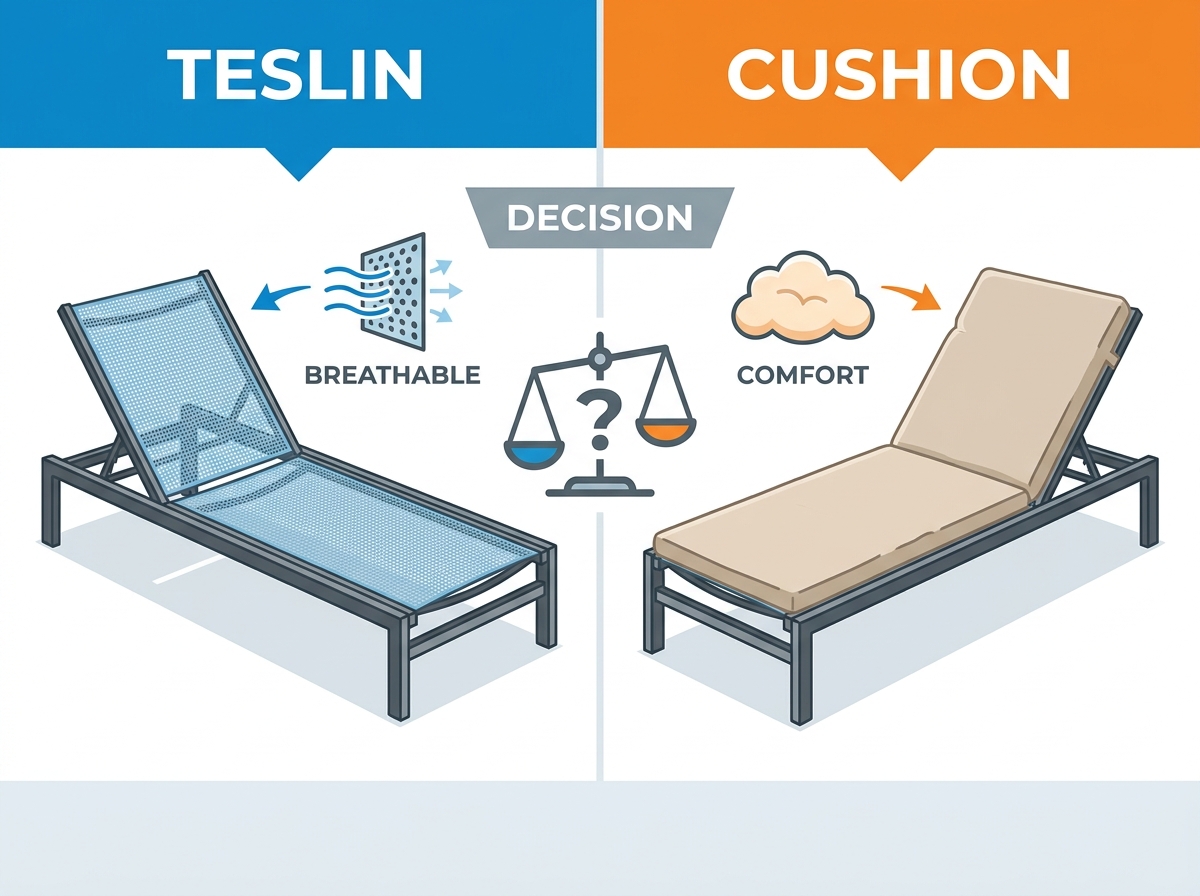
Selecting a powder-coated frame solves the immediate problems of rust and excessive weight. However, the surface material dictates the actual user experience, daily maintenance burden, and long-term longevity of your outdoor furniture. Buyers frequently underestimate the operational reality of their surface choice. The decision between a woven mesh, commonly known as Teslin, and an upholstered cushion creates a permanent trade-off between low-maintenance durability and premium aesthetic comfort. A beautifully designed frame loses its appeal if the seating surface requires constant upkeep or fails to provide adequate ergonomic support during use.
This guide evaluates both surface types through the lenses of climate resilience, maintenance overhead, and long-term value. We will help you finalize your outdoor furniture specifications. By understanding the distinct advantages and inherent limitations of each material, you can select an aluminium sun lounger that perfectly aligns with your specific environmental conditions and lifestyle requirements.
Teslin (Textilene) prioritizes operational efficiency: It offers extreme weather resistance, zero drying time, and minimal maintenance, making it ideal for high-traffic, commercial, poolside, or exposed environments.
Cushions prioritize ergonomic luxury and design flexibility: They provide superior comfort and aesthetic customization but require strict maintenance protocols, weather protection, and dedicated storage.
Climate dictates the baseline: High-humidity and frequent-rain environments heavily penalize standard cushions, requiring upgrades to reticulated (quick-dry) foam and marine-grade acrylics to match Teslin’s baseline performance.
Hybrid approaches exist: Buyers can opt for a Teslin-surfaced aluminium sun lounger and utilize removable, aftermarket cushion pads to bridge the gap between durability and seasonal comfort.
Space constraints influence design choices: Small balconies or terraces demand folding or highly stackable frame designs, which inherently favor low-profile Teslin over bulky cushioned options.
Evaluating lounger surfaces requires looking at four foundational pillars. These are ergonomic support, weather resilience, maintenance footprint, and aesthetic alignment. Ergonomic support determines how long a user can comfortably utilize the furniture without experiencing pressure points. Weather resilience dictates how the material handles ultraviolet radiation, heavy rainfall, and temperature fluctuations without degrading. The maintenance footprint encompasses the daily and seasonal labor required to keep the surface clean and functional. Finally, aesthetic alignment ensures the material complements the surrounding architectural elements and landscape design. When you manage properties or design outdoor spaces, you quickly learn that ignoring any of these pillars leads to premature furniture replacement.
We often see buyers focus entirely on the frame color or the initial visual appeal. They forget that the surface takes the brunt of the physical wear. Sunscreen oils, spilled drinks, chlorine, and salt spray attack the seating material daily. If you choose a surface that cannot withstand your specific local conditions, you will spend more time cleaning and repairing the furniture than actually using it. A practical evaluation of these four criteria prevents costly mistakes.
The rigid, lightweight nature of aluminium requires a surface that interacts harmoniously with the metal structure. Aluminium does not flex or yield. Therefore, the chosen surface must either provide its own structural give, such as a tensioned Teslin sling suspended across the frame, or rely entirely on external padding, like thick cushions placed over a solid or slatted metal base. A mismatch between frame design and surface type leads to discomfort or accelerated wear. For instance, placing a thin cushion over widely spaced aluminium slats will result in a noticeable lack of support.
You must also consider how the surface attaches to the frame. Sling rails need to be robust enough to hold the tension of the mesh without bowing inward over time. If you opt for cushions, the frame needs adequate depth to hold the pads securely, preventing them from sliding off when a user sits down. The integration between the metal and the seating material defines the overall structural integrity of the piece.
The primary intended use of the furniture heavily dictates the optimal surface tension and cushioning. Active poolside environments demand a surface that handles chlorinated water and wet swimsuits without absorbing moisture. Users frequently transition from swimming to sunbathing in these settings. In contrast, shaded areas dedicated to long-duration reading, napping, or relaxing benefit significantly from the plush, yielding nature of deep cushions. Identifying the primary activity ensures the surface material enhances rather than hinders the outdoor experience.
Consider the demographic of the users as well. Older individuals often prefer a firmer surface that is easier to stand up from, making a taut mesh preferable. Younger users or those looking for a resort-style lounging experience might prioritize the deep sink of a thick foam cushion. Match the surface to the specific activities and the people who will perform them.
Teslin, often referred to generically as textilene, is a highly durable woven mesh fabric. It consists of a strong polyester yarn core that is individually coated in polyvinyl chloride (PVC) before being woven into a fabric. This specific manufacturing process provides exceptional tensile strength, preventing the material from tearing under weight. The PVC coating also ensures dimensional stability, meaning the fabric retains its shape and resists stretching even after prolonged exposure to the elements and heavy usage.
The quality of the mesh depends heavily on the denier of the yarn and the tightness of the weave. A higher denier indicates a thicker, stronger yarn. When inspecting a mesh surface, look for a tight, uniform weave without any loose threads or irregular gaps. The PVC coating should feel smooth and consistent, providing a solid barrier against moisture and dirt penetration.
The inherent porosity of woven Teslin allows water to pass through the material instantly. This moisture management capability essentially eliminates drying time. You can use the furniture immediately after a rain shower or while wearing wet swimwear. Furthermore, the breathable mesh prevents heat buildup compared to dense foam cushions. This thermal regulation is a critical factor in direct sun, keeping the surface cool and comfortable against the skin.
From a sanitation perspective, PVC-coated mesh handles rigorous cleaning. You can pressure-wash or bleach-clean the material to remove bird droppings, sunscreen oils, or environmental grime without degrading the structural integrity of the yarn. This makes it an absolute favorite for property managers who need to turn over pool decks quickly and efficiently every morning.
Despite its durability, Teslin has a firm, unyielding nature compared to plush foam. Some users find the tensioned mesh too rigid for extended lounging. There is also a risk of eventual sagging over a five to ten-year horizon. This happens particularly if the metal frame lacks proper tensioning rails or if the material is subjected to loads exceeding its weight capacity. Once the mesh stretches beyond its elastic limit, it cannot be tightened and must be replaced.
To mitigate comfort issues, manufacturers often integrate ergonomic headrests or offer built-in, low-profile padded mesh options. These solutions soften the surface and provide targeted support without introducing the bulk and maintenance requirements of traditional cushions. However, they still do not replicate the deep comfort of a five-inch foam pad.
An outdoor cushion consists of two primary components: the cover fabric and the internal core. Premium cover fabrics utilize solution-dyed acrylics. The color is integrated into the fiber itself before the yarn is spun, offering exceptional fade resistance. Cheaper alternatives often use printed polyesters, which fade rapidly under UV exposure. The core dictates moisture handling. Reticulated quick-dry foam features an open-cell structure that allows water to drain rapidly. Standard polyurethane foam acts like a sponge, trapping moisture and requiring extensive drying times.
You must verify the specifications of both the cover and the core before purchasing. A high-quality acrylic cover over a cheap polyurethane core will still result in a waterlogged, moldy cushion. Conversely, a reticulated foam core covered in cheap polyester will drain well but look faded and worn within a single season. Both components must be rated for outdoor use.
The primary advantage of a cushioned surface is its ergonomic yield. High-density foam conforms to the body, relieving pressure points and providing superior comfort for extended periods of use. If you plan to sleep or read for hours outdoors, cushions are the superior choice. Cushions also offer significant design versatility. You have the ability to swap covers to update aesthetics, introduce new color palettes, or match seasonal decor changes without needing to replace the entire metal frame.
This modularity allows for continuous aesthetic refreshment. You can maintain a neutral frame color and change the cushion covers every few years to keep up with current design trends. This flexibility is highly valued in residential settings where homeowners want to personalize their outdoor living spaces.
The most significant drawback of cushioned surfaces is the moisture trap. Standard foams suffer from water ingress, leading to mold and mildew proliferation if not dried properly. This reality necessitates bringing cushions indoors or covering them during inclement weather. The maintenance burden is also substantially higher. Cushions require regular spot-cleaning for spills, laundering removable covers in line with strict manufacturer care instructions, and periodically applying aftermarket durable water repellent coatings.
You also have to deal with wildlife and environmental debris. Birds, squirrels, and neighborhood cats often find plush cushions attractive. Pollen and tree sap stick to fabric much more readily than they do to smooth PVC mesh. Keeping cushions looking pristine requires a dedicated, ongoing effort.
Climate plays a definitive role in surface selection. PVC-coated Teslin exhibits exceptional resistance to UV degradation, maintaining its structural integrity and color in harsh sunlight. Solution-dyed acrylic cushions also resist fading but require more care to prevent environmental staining. In coastal or saltwater environments, the porous nature of Teslin prevents salt accumulation and allows for easy rinsing. In arid or desert climates, while both materials perform well, the breathable nature of mesh prevents the uncomfortable heat retention often experienced with dense foam cushions.
Feature | Teslin (Sling Mesh) | Cushioned Surface |
|---|---|---|
Drying Time | Instant (water passes through) | Hours to days (depends on foam type) |
UV Resistance | High (PVC coating protects yarn) | High (if solution-dyed acrylic is used) |
Maintenance Level | Low (hose off or wipe down) | High (laundering, spot cleaning, storage) |
Comfort Profile | Firm, supportive, breathable | Plush, yielding, temperature-retaining |
Storage Requirement | Minimal (can be left outside) | High (requires dry, covered storage) |
When exploring various aluminum sun lounger design options, storage and mobility are critical factors. The surface directly impacts winterization and daily storage. Teslin models can often be stacked four to six units high or folded flat, allowing for compact storage in tight spaces. Cushioned models carry a hidden footprint. They require large, watertight deck boxes or dedicated garage space for off-season storage. Mobility features also interact with the surface type. The integration of rear wheels helps navigate heavier cushioned layouts, whereas ultra-light, easily liftable Teslin frames often do not require wheels for easy repositioning.
If you have a small balcony, a folding mesh frame is usually the only practical choice. If you have a sprawling patio with a dedicated pool house, the storage requirements of thick cushions become a non-issue. Always measure your available storage space before committing to an upholstered design.
Armrest design affects both stackability and comfort. Sleek, integrated armrests on mesh models facilitate tight stacking. Wide armrests on cushioned models prioritize resting space but limit storage efficiency. Backrest adjustability also interacts differently with each surface. Multi-position reclining mechanisms work seamlessly with a taut Teslin sling, maintaining consistent tension. A thick cushion may shift, bunch, or require manual readjustment when moving the backrest from an upright reading position to a flat sunbathing posture.
Pay attention to the hinge points on adjustable frames. Mesh surfaces need reinforced stitching around the hinges to prevent tearing when the backrest moves. Cushions need secure ties or velcro straps to keep them anchored to the frame during adjustment. These small design details significantly impact the daily user experience.
In residential use, the daily reality differs drastically. A wipeable Teslin model requires a quick pass with a towel to remove morning dew, making it instantly ready for use. A cushioned model requires retrieving the pads from storage, deploying them, and ensuring they remain protected from sudden weather changes. For commercial and hospitality use, hotels heavily favor mesh surfaces for operational efficiency. The rapid turn-around times after rainfall and the significantly reduced housekeeping labor make tensioned mesh the standard for high-traffic environments.
Consider the labor cost of your own time. If you spend twenty minutes every morning wiping down and setting up cushions, that is time taken away from enjoying your outdoor space. Mesh surfaces give you that time back, offering a true low-maintenance lifestyle.
The upfront pricing varies significantly based on material quality. A premium tensioned-mesh model requires precision engineering to ensure the fabric remains taut, which influences the initial frame cost. However, a slatted metal model equipped with high-density, marine-grade cushions and solution-dyed acrylic covers generally represents a higher initial investment. This is due to the complex manufacturing of the upholstery and the specialized materials required to make it outdoor-ready.
Do not be fooled by cheap cushioned options. A low-cost cushion will fail within a year, requiring immediate replacement. When comparing prices, ensure you are looking at equivalent quality tiers. A high-end mesh frame will outlast a low-end cushioned frame by a decade.
Long-term value depends heavily on the replacement cycle. Cushions typically require replacement every three to five years due to foam compression, stubborn environmental staining, or eventual fabric fading. This recurring expense must be factored into the long-term budget. Additionally, upholstered options require the purchase of protective covers, dedicated storage solutions, and specialized fabric cleaners. Mesh surfaces generally offer a longer lifespan before requiring a replacement sling, provided the PVC yarn is of high quality and the frame maintains proper tension.
When a mesh sling does eventually fail, replacing it is usually a straightforward process. Many manufacturers sell pre-sewn replacement slings that slide directly into the existing frame rails. This extends the life of the furniture significantly without the cost of buying a completely new unit.
Frame the decision as a strategic choice regarding where you allocate value. Opting for a mesh surface means paying for operational ease, weather resilience, and minimal daily labor. Opting for a cushioned surface means paying for aesthetic luxury, customizable design, and premium ergonomic comfort. The right choice aligns with your willingness to invest time in maintenance versus your desire for a specific aesthetic and tactile experience.
There is no wrong answer, only the answer that fits your specific lifestyle. If you host formal outdoor dinners and want a luxurious lounge area, cushions provide the necessary upscale feel. If you have kids splashing in the pool every afternoon, mesh is the only logical choice.
Over time, continuous heavy loads can cause mesh fabrics to stretch or tear at the attachment points. To mitigate this risk, advise buyers to verify the denier, or thickness, of the PVC yarn before purchase. Higher denier ratings indicate a stronger, more resilient fabric. Additionally, check if the manufacturer offers replaceable sling kits. The ability to slide a new mesh sling into the existing metal frame extends the life of the furniture indefinitely without requiring a complete replacement.
You should also inspect the tensioning mechanism on the frame. High-quality frames use hidden bolts to pull the side rails tight, ensuring the mesh remains taut over years of use. Avoid frames where the mesh is simply riveted to the metal, as these cannot be adjusted once they begin to sag.
Moisture retention in foam leads rapidly to mold and mildew, ruining the aesthetic and sanitary condition of the seating. Instruct buyers to strictly specify reticulated foam for the core and solution-dyed acrylic for the covers. These materials actively resist moisture absorption and fungal growth. Furthermore, prioritize removable, machine-washable covers equipped with heavy-duty zippers, allowing for thorough cleaning and seasonal sanitization.
Store cushions vertically when not in use. This allows any trapped water to drain out of the bottom edge much faster than if they are left lying flat. Proper storage techniques significantly extend the life of outdoor upholstery.
Lightweight metal frames paired with thick, bulky cushions act as sails in high winds, leading to displaced furniture and potential property damage. In coastal, rooftop, or high-elevation areas, this is a significant operational risk. Recommend utilizing tie-downs, integrated track systems that lock the pads to the frame, or selecting heavier-duty frame configurations. Alternatively, opting for a porous mesh surface allows wind to pass through the material, drastically reducing the risk of displacement during storms.
If you live in a hurricane-prone area, mesh furniture is vastly superior. You can simply stack the frames and secure them in a corner, whereas cushions must be brought inside the house, taking up valuable emergency space.
Neither surface material is objectively superior. The right choice depends entirely on your willingness to perform routine maintenance, your local climate conditions, and your available storage space. Teslin delivers unmatched operational efficiency, while cushions provide superior ergonomic luxury. By aligning the material characteristics with your daily habits and environmental realities, you ensure your outdoor space remains both functional and inviting.
To finalize your decision, follow these actionable steps:
Measure your available watertight storage space to determine if you can realistically accommodate bulky cushions during the off-season or inclement weather.
Request physical fabric swatches from manufacturers to evaluate the texture, denier strength of the mesh, or the colorfastness of the acrylic covers in your specific outdoor lighting.
Verify the warranty terms specifically regarding UV fading, frame finish degradation, and foam compression limits to understand the manufacturer's confidence in their materials.
Assess your local microclimate, noting the frequency of sudden rain showers or high wind events, to determine if quick-drying or wind-permeable materials are strictly necessary.
A: While marine-grade acrylic covers and reticulated foam can withstand moisture, leaving them exposed to heavy, continuous rain accelerates wear and increases mold risk. It is always best to store them indoors or use waterproof covers during storms.
A: Teslin is a highly durable, woven mesh material made from polyester yarn that is individually coated in PVC. This construction makes it waterproof, breathable, UV-resistant, and capable of supporting weight without tearing.
A: High-quality outdoor cushions typically last between three to five years. Lifespan depends on UV exposure, local humidity, maintenance routines, and whether the foam core compresses under heavy, frequent use.
A: Yes, high-quality tensioned mesh provides excellent ergonomic support by yielding slightly to body weight while remaining firm. The breathable nature also enhances comfort in hot weather by preventing heat buildup.
A: Maintenance is minimal. Simply hose off loose dirt, or wipe the surface with a soft brush, mild dish soap, and water. For stubborn stains or bird droppings, a diluted bleach solution can be used safely.
A: Yes, many buyers use a hybrid approach. You can purchase removable aftermarket pads to place over the mesh for seasonal comfort, retaining the durable mesh base for wet conditions or active poolside use.
A: Folding frames pair best with thin mesh surfaces to maintain a compact profile for storage. Integrated wheels are highly recommended for cushioned models, as the added bulk and weight make them harder to lift and reposition manually.


