Views: 0 Author: Site Editor Publish Time: 2026-08-10 Origin: Site


Managing pool and beach facilities in the hospitality sector involves massive hidden operational burdens. Facility teams dedicate countless daily labor hours to furniture deployment, cleaning, and retrieval. Traditional outdoor furniture creates severe friction points for these teams. Heavy materials cause staff fatigue and increase workplace injury risks. Bulky designs overwhelm limited off-season storage rooms. Harsh environmental factors like UV rays, chlorine, and salt spray accelerate material degradation, forcing early replacements. Furthermore, the hidden labor required to assemble knock-down furniture drains maintenance resources before the summer season even begins.
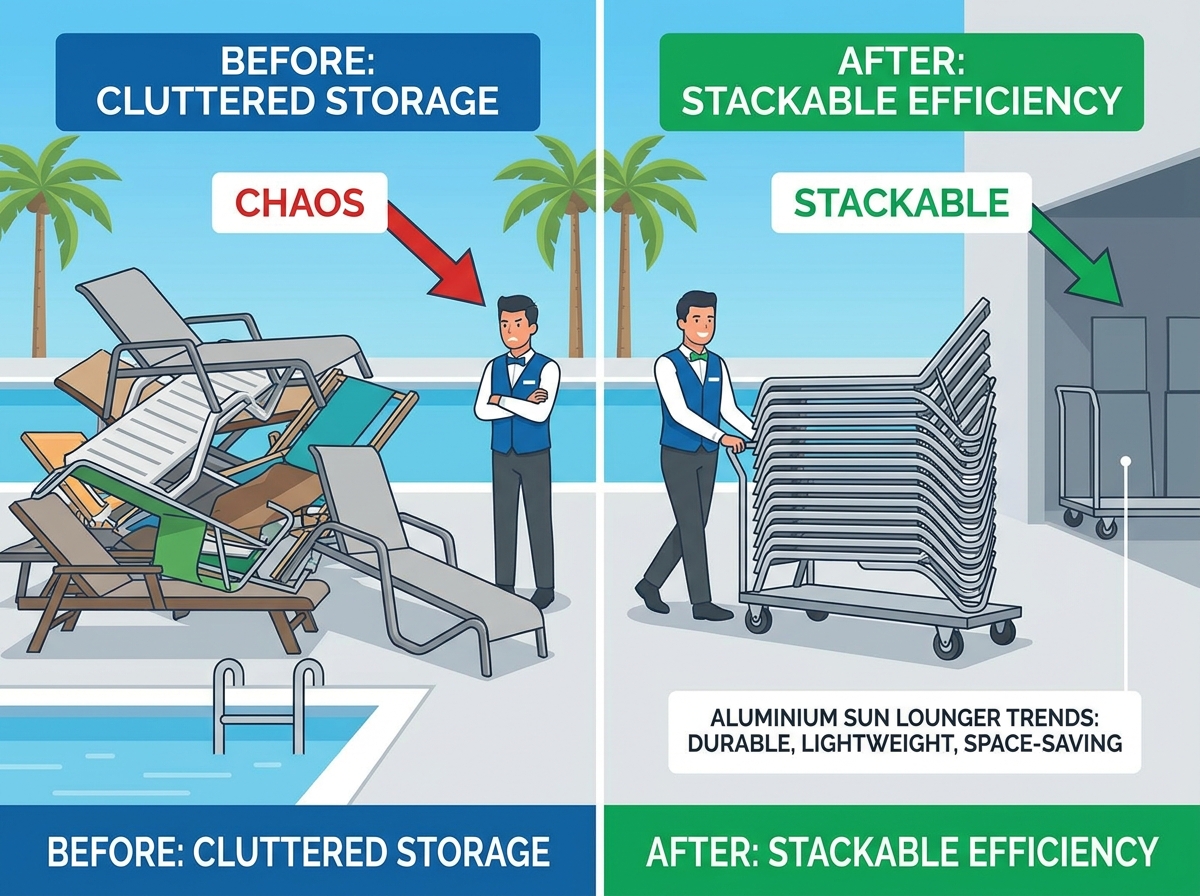
Transitioning to a stackable aluminium sun lounger serves as a strategic operational upgrade. Evaluating these assets requires looking past basic aesthetic appeal. You must focus on space-saving architecture, structural assembly, and long-term durability. Prioritizing lightweight, weather-resistant materials and high-density storage capabilities allows hospitality operators to drastically reduce daily setup times. You can minimize workplace injuries and optimize limited storage footprints. We will break down how to evaluate frame construction, compare materials, and implement strategies to protect your outdoor furniture investments.
Labor Efficiency: Stackable aluminium frames significantly reduce daily setup and teardown times due to their high strength-to-weight ratio.
Storage Density: Commercial stackable designs allow for vertical storage of 15-20 units per footprint, resolving off-season space constraints.
Material Longevity: Powder-coated aluminium resists rust and UV degradation, offering superior long-term value compared to commercial resin or wood alternatives.
Procurement Standard: Evaluating frame gauge, weld quality, sling material (e.g., Textilene), assembly configurations, and environment-specific hardware is critical to avoiding premature failure in high-traffic resort environments.
Commercial outdoor furniture must meet strict baseline requirements to survive in a high-traffic resort environment. Guest comfort and aesthetic alignment keep your brand standards high. However, operational efficiency dictates the actual viability of the furniture on the ground. Daily deployment logistics heavily impact staffing budgets and overall operational overhead. When your staff must move hundreds of heavy loungers twice a day, labor hours inflate rapidly. Fatigue sets in, leading to slower turnover times and potential staff injuries.
Procurement strategies must weigh the operational differences between fully welded, pre-assembled frames and knock-down assembly-required units. Fully welded frames require zero setup labor upon arrival. You unbox them and place them directly on the pool deck. They demand higher shipping volumes, but they save hundreds of maintenance hours. Knock-down loungers offer lower shipping volumes. Yet, they require intensive post-delivery assembly labor. This diverts your maintenance teams from core facility tasks like HVAC repair or pool chemical balancing.
Prioritize fully welded frames to eliminate assembly bottlenecks during peak season prep.
Assess daily deployment routes to gauge required labor hours for deck setups.
Ensure aesthetic choices do not compromise structural integrity or stackability.
Calculate the exact time it takes one employee to move a single unit across the deck.
The spatial economics of stackable designs fundamentally change how resorts manage off-season logistics. Storing 100 stackable units requires a fraction of the square footage needed for 100 non-stackable or folding units. This high-density storage capability prevents facilities from needing off-site storage rentals. It stops you from cluttering valuable back-of-house corridors or maintenance sheds.
Surface preparation and cleaning cycles before storage are minimal for aluminium and mesh combinations. Fast-drying designs accelerate end-of-season operations. Your teams can wash, dry, and stack hundreds of units in a single afternoon. Frame drainage specifications matter immensely here. Hollow frames must feature integrated weep holes. These holes prevent water retention and stagnant pooling during vertical storage. Without weep holes, trapped water causes internal degradation or freezing damage in colder winter climates.
Storage Metric | Stackable Aluminium | Non-Stackable Wood | Folding Resin |
|---|---|---|---|
Units per 10 sq ft | 15 - 20 units | 2 - 3 units | 8 - 10 units |
Prep Time per Unit | 2 minutes (spray and wipe) | 15 minutes (clean and oil) | 5 minutes (scrub joints) |
Winterization Needs | None (store as-is) | Climate-controlled room | Covered to prevent cracking |
The average weight of a commercial aluminium sun lounger ranges between 15 and 25 pounds. This makes it exceptionally manageable for daily operations. In contrast, marine-grade polymer, resin, and teak wood loungers often weigh significantly more. They usually require two staff members to move safely. This weight difference directly impacts workplace injury rates and daily ergonomics for your team.
Consider rapid weather-related clearing events. Sudden summer storms require staff to secure pool decks quickly. Lightweight aluminium allows a single employee to stack and secure multiple units in minutes. This reduces fatigue and minimizes the risk of musculoskeletal injuries associated with lifting heavy, water-logged furniture under pressure.
Aluminium performs exceptionally well across harsh micro-climates. It handles beachfronts, saltwater pools, high-humidity lakefronts, and public waterparks with ease. The science of aluminium oxidation provides a natural advantage. When exposed to air, aluminium forms a microscopic protective oxide layer. This layer halts further corrosion. Ferrous metals, on the other hand, rust and deteriorate rapidly in these environments.
Resin alternatives become brittle, fade, and warp under prolonged UV exposure. They lose structural integrity over time, leading to cracked legs and sagging frames. Wood requires intensive seasonal sanding, oiling, and varnishing to prevent rot and splintering. Aluminium bypasses these maintenance hurdles entirely. It provides a stable, weather-resistant platform year-round with minimal upkeep.
Evaluating the true cost of outdoor furniture requires looking at a five-year operational cycle. You must calculate the initial unit cost, assembly labor, annual maintenance labor, and replacement frequency. Budget resin chairs might look appealing on a purchase order. However, they often crack within two seasons under heavy commercial use.
Commercial aluminium requires a higher upfront investment. Yet, it yields a vastly superior lifecycle value. You eliminate seasonal sanding labor. You remove the need for replacement cushions. You avoid the disposal fees associated with throwing away broken plastic chairs every fall. Over five years, the operational savings in labor and replacement parts heavily favor extruded aluminium frames.
Evaluating aluminium thickness, or gauge, is the first step in ensuring commercial viability. High-traffic use requires specific commercial grades. We recommend 6063-T5 extruded aluminium. This grade offers the necessary tensile strength to withstand daily guest use and rough handling by staff. Thin, residential-grade frames will bend, dent, and fail under commercial stress.
Structural integrity relies heavily on the quality of the joints. Operational superiority is found in 360-degree, full-circumference welds. Budget spot welds or bolt-together frame joints introduce weak points. These joints loosen over time, leading to wobbly frames and eventual breakage. Always inspect the weld beads; they should be smooth, continuous, and fully sealed against moisture intrusion.
Verify the aluminium grade is 6063-T5 or equivalent commercial extrusion.
Inspect all primary load-bearing joints for 360-degree continuous welds.
Check the underside of the frame for properly drilled weep holes.
Ensure the wall thickness of the extrusion exceeds 1.5mm for heavy-duty use.
Breathable, PVC-coated polyester fabrics, such as Textilene or Batyline, offer immense operational benefits over traditional foam cushions. These sling materials eliminate commercial laundry costs. They dry rapidly after rain showers. They possess natural resistance to mold, mildew, and chlorine bleaching.
Foam cushions act as massive sponges. They require staff to run out and remove them before rain hits. If they get wet, staff must spend hours propping them up to dry. Sling materials allow water to pass through instantly. Your loungers are ready for guest use almost immediately after inclement weather passes, maximizing guest satisfaction and minimizing staff labor.
Effortless mobility is crucial for dynamic pool deck layouts. Recessed nylon or rubberized wheels allow staff and guests to move units without dragging them. Dragging damages the frame legs and leaves deep scratches on expensive pool deck surfaces. Recline safety must also be scrutinized. Multi-position ratchets require integrated safety-lock mechanisms. This prevents guest finger-pinching and stops the backrest from collapsing unexpectedly.
Replaceable skid pads and protective foot caps extend the lifespan of the frame. They absorb the friction of daily movement across concrete. Furthermore, all assembly and joint hardware must be 304 or 316 marine-grade stainless steel. Standard steel bolts will rust within weeks in a coastal environment. This rust bleeds down the frame and permanently stains your concrete and paver decks.
Modern hospitality design favors sleek, low-profile frames. These designs maximize the number of loungers you can place on a pool deck. This minimalist approach prevents visual clutter. It ensures lifeguard sightlines remain unimpeded, which is a critical safety compliance factor. current aluminum sun lounger trends emphasize clean lines, hidden hardware, and unobtrusive silhouettes.
Flat-lay capabilities are also trending heavily across luxury resorts. Dual-purpose designs that lay completely flat cater to guests who prefer stomach sunbathing. Operationally, flat-lay models stack perfectly flush. This increases storage density and provides a much more stable stack during off-season warehousing.
Finishing technologies have evolved far beyond basic liquid paint. Faux-wood grain sublimation on aluminium provides the warm aesthetic of timber. You get the look of wood without the associated maintenance nightmare of sanding and oiling. Matte-textured powder coats are highly sought after in high-end properties.
Glossy finishes show every single fingerprint, body oil smudge, and sunscreen stain. Matte-textured powder coats resist these blemishes. They keep the furniture looking clean throughout the day with less wiping required by your pool attendants. Ensure the powder coating is applied electrostatically and baked properly for maximum adhesion.
Sourcing loungers made from high percentages of recycled aluminium directly supports hotel Environmental, Social, and Governance initiatives. Aluminium is infinitely recyclable without losing its structural properties. Selecting sustainable furniture appeals to eco-conscious guests. It helps properties achieve green certifications like LEED. This aligns your procurement strategy with broader corporate responsibility goals while still delivering a durable operational asset.
Even on a premium frame, cheap steel screws, non-anodized rivets, or compromised powder coating at joint connections cause massive problems. They lead to rust bleeding. This rust drips down and causes severe deck staining that requires acid washing to remove. To mitigate this risk, your procurement contracts must explicitly specify 304 or 316 marine-grade stainless steel hardware. Coastal properties should also mandate regular fresh-water washdowns to remove corrosive salt accumulation from the frames.
The lightweight nature of aluminium makes these loungers susceptible to wind displacement. They can be blown into pools, onto beaches, or cause structural damage during high-wind events. High-rise rooftop pools are particularly vulnerable to sudden gusts. Evaluate heavier-gauge options or models with weighted base elements to counter this. Implement strict wind-protocol stacking procedures. Ensure staff secure all furniture with heavy-duty straps before storm fronts arrive.
Repeated stacking by hurried staff chips powder coating. This leads to aesthetic degradation and exposes the raw metal to the elements. Narrow feet can also sink into beach sand or soft turf, frustrating guests who try to sit down. Ensure shortlisted models feature integrated nylon stacking bumpers. These protective glides separate the metal frames when nested. For sand or turf environments, specify wide-profile, anti-sink sled bases or specialized foot caps to distribute weight evenly.
A stackable aluminium sun lounger should be evaluated as a long-term operational asset rather than a purely decorative purchase. Its lightweight frame can reduce daily setup labor and staff fatigue, while efficient nesting helps hotels and resorts use limited storage space more effectively.
For commercial environments, durability depends on the aluminium grade, frame thickness, weld quality, powder-coat finish, sling material, drainage design, and corrosion-resistant hardware. Fully welded construction can also eliminate seasonal assembly work and reduce the risk of joints loosening under frequent use.
Buyers should match each model to the property’s climate, deck surface, wind exposure, cleaning routine, and expected guest traffic. The best option balances comfort and appearance with safe handling, high storage density, low maintenance requirements, and reliable performance throughout its service life.
A: Most commercial stackable loungers can safely nest between 10 to 20 units high. This depends entirely on the frame geometry, overall weight, and specific manufacturer guidelines to prevent tipping and frame distortion.
A: UV-resistant powder coatings and light-colored, breathable sling materials dissipate heat effectively. Unlike bare metal or dark, dense plastics, quality powder-coated aluminium remains comfortable to the touch even in direct sunlight.
A: Fully welded loungers arrive pre-assembled, allowing immediate deployment with zero labor. Flat-packed or knock-down loungers require significant staff time to assemble, which increases operational labor costs despite lower initial shipping fees.
A: Extruded aluminium is forced through a die to create hollow, lightweight, and incredibly strong profiles ideal for modern, stackable loungers. Cast aluminium is poured into molds, resulting in heavy, solid, and traditional designs that are rarely stackable.
A: Maintenance requires only mild soap and water applied with a soft cloth or sponge. Avoid abrasive brushes, bleach, or harsh chemical solvents, as these will scratch or degrade the protective powder-coated finish.
A: Yes, commercial-grade models typically feature replaceable slings. When the fabric eventually wears out, replacing just the sling extends the life of the durable aluminium frame and drastically reduces long-term replacement costs.
A: Standard commercial warranties usually cover the aluminium frame for 3 to 5 years against structural failure. The powder-coat finish and sling fabric are typically covered for 1 to 3 years under normal commercial wear and tear.


